NordVPN vs Surfshark (2026): Which VPN Is Better for Privacy, Streaming, Speed, and Value?

Sunil Kumar
Founder & Editor-in-Chief
Compare NordVPN vs Surfshark in 2026. Discover differences in speed, privacy, security, streaming performance, pricing, features, and value to find the best VPN for your needs.

Introduction
The global VPN market has experienced exponential growth in recent years, driven by an escalating awareness of digital vulnerabilities, increased remote work, and a widespread desire to bypass geographical content restrictions, which are among the top technology trends in 2026. In 2026, as internet service providers (ISPs) implement more aggressive data tracking and governments tighten digital surveillance, the necessity for a robust virtual private network is no longer a matter of debate. It is a fundamental requirement for anyone serious about their online privacy. However, the sheer volume of available best VPN services can be overwhelming, making head-to-head comparisons not just helpful, but essential for making an informed purchasing decision.
Choosing the right VPN goes beyond simply selecting the cheapest option or the one with the most aggressive marketing campaign. It requires a nuanced understanding of how different providers balance the critical pillars of speed, security, streaming capabilities, and overall user privacy. Two of the most dominant forces in this landscape are NordVPN and Surfshark. While they operate under the same parent company, Nord Security, they maintain distinct infrastructures, development philosophies, and target demographics.
Users today demand a seamless experience. They want military-grade encryption without sacrificing the bandwidth necessary for flawless 4K streaming. They require strict, audited no-logs policies to ensure their data remains out of the hands of advertisers and data brokers. In this comprehensive comparison, we will dissect every aspect of NordVPN and Surfshark, evaluating their performance across rigorous real-world testing scenarios. By the end of this guide, you will have a clear understanding of which VPN aligns perfectly with your specific digital lifestyle and security requirements.
QUICK VERDICT
If you need immediate answers without diving into the technical specifics, here is our quick verdict based on extensive testing of both providers in 2026.
Best Overall
NordVPN takes the title for the best overall VPN. Its proprietary NordLynx protocol delivers unparalleled speeds, while advanced features like Threat Protection and Meshnet provide a comprehensive cybersecurity suite that goes beyond standard VPN capabilities.
Best for Privacy
NordVPN edges out the competition for hardcore privacy enthusiasts. While both offer audited no-logs policies, NordVPN's jurisdiction in Panama and its robust Double VPN and Onion Over VPN servers provide an extra layer of operational security.
Best for Streaming
NordVPN is the superior choice for streaming. Its SmartPlay technology consistently bypasses the most stubborn geo-blocks, ensuring reliable access to international libraries on Netflix, Hulu, Disney+, and BBC iPlayer without frustrating buffering.
Best for Speed
NordVPN is the faster service. In our head-to-head speed tests, NordLynx consistently outperformed Surfshark's WireGuard implementation, particularly over long-distance server connections, making it ideal for large downloads and competitive gaming.
Best Budget Option
Surfshark is the undisputed champion of value. Its long-term subscription plans are significantly cheaper than NordVPN's, offering premium features at a fraction of the cost, making it the perfect choice for budget-conscious consumers.
Best for Families
Surfshark is the clear winner for households. Its unique policy of allowing unlimited simultaneous device connections on a single subscription means you can secure every smartphone, tablet, laptop, and smart TV in your home without paying extra.
Best for Beginners
Surfshark offers the most beginner-friendly experience. Its clean, intuitive interface strips away complex technical jargon, allowing anyone to establish a secure, encrypted connection with a single click.
NordVPN vs Surfshark at a Glance
Before we delve into the detailed analysis, let's look at a high-level comparison of the core specifications for both providers.
| Feature | NordVPN | Surfshark |
|---|---|---|
| Starting Price (Long-Term Plan) | ~$3.09/month | ~$2.19/month |
| Simultaneous Connections | 10 Devices | Unlimited |
| Server Network | 6,000+ Servers in 111 Countries | 3,200+ Servers in 100 Countries |
| Encryption | AES-256-GCM | AES-256-GCM |
| Primary Protocol | NordLynx (WireGuard-based) | WireGuard |
| Jurisdiction | Panama | Netherlands |
| Audited No-Logs Policy | Yes (PwC, Deloitte) | Yes (Cure53, Deloitte) |
| RAM-Only Servers | Yes | Yes |
| Threat/Ad Blocker | Threat Protection (Advanced) | CleanWeb |
| Streaming Support | Excellent (SmartPlay) | Very Good |
| Customer Support | 24/7 Live Chat | 24/7 Live Chat |
| Money-Back Guarantee | 30 Days | 30 Days |
How We Evaluated These VPNs
To provide an objective, evidence-based comparison, we subjected both NordVPN and Surfshark to a rigorous testing methodology. We evaluated these services across seven critical categories to ensure our recommendations reflect real-world performance rather than marketing claims.
Security
We analyzed the underlying cryptographic standards, testing the effectiveness of the AES-256 encryption and the stability of protocols like WireGuard and NordLynx. We also conducted extensive leak testing (DNS, WebRTC, and IPv6) and verified the responsiveness of the automatic kill switches under simulated network failures.
Privacy
A VPN is fundamentally a trust-based product. We scrutinized the privacy policies of both companies, examined the legal implications of their respective jurisdictions (Panama vs. the Netherlands), and reviewed the scope and frequency of their independent security audits to confirm their no-logs claims.
Streaming
Bypassing geographical restrictions is a primary use case for millions of users. We systematically tested both VPNs against major streaming platforms, including Netflix, Disney+, Amazon Prime Video, and BBC iPlayer, measuring their ability to consistently unblock regional libraries without triggering proxy errors.
Speed
Because encryption inherently adds overhead to your connection, we conducted comprehensive speed tests across local, regional, and long-distance servers. We measured download speeds, upload speeds, and latency (ping) to determine which service provides the smoothest experience for bandwidth-heavy activities.
Ease of Use
The most powerful security tool is useless if it is too complicated to operate. We evaluated the user interface and overall experience across desktop (Windows, macOS) and mobile (iOS, Android) applications, focusing on the intuitiveness of the design and the accessibility of advanced settings.
Pricing
We conducted a detailed cost analysis, comparing the short-term and long-term subscription tiers of both providers. We factored in the available features, device limits, and renewal rates to assess the true financial commitment required for each service.
Overall Value
Finally, we synthesized our findings to determine the overall value proposition. We weighed the cost of the subscription against the performance, security features, and unique benefits (like Surfshark's unlimited connections or NordVPN's Meshnet) to decide which VPN offers the best return on investment.
Security Comparison
When evaluating cybersecurity tools, the underlying security infrastructure is the most critical factor. Both NordVPN and Surfshark utilize industry-leading technology, but their specific implementations differ.
Encryption
Both NordVPN and Surfshark employ AES-256-GCM encryption, which is the current gold standard in the cybersecurity industry. This level of encryption is utilized by government agencies, military organizations, and financial institutions worldwide to protect top-secret data. Brute-forcing AES-256 encryption using modern computing power is considered mathematically impossible, ensuring that your data remains completely confidential while in transit over either network.
Protocols
The VPN protocol determines how your data is routed and encrypted. Surfshark relies primarily on the open-source WireGuard protocol, which is celebrated for its lightweight codebase, rapid connection times, and excellent efficiency on mobile devices. It also supports older, proven protocols like OpenVPN and IKEv2 as fallbacks.
NordVPN, on the other hand, utilizes NordLynx, a proprietary protocol built around the core architecture of WireGuard. NordVPN engineered NordLynx to eliminate a minor privacy concern inherent to standard WireGuard (which requires storing user IP addresses temporarily on the server). By implementing a custom double NAT (Network Address Translation) system, NordLynx delivers the incredible speeds of WireGuard while ensuring absolute privacy.
Kill Switch
A kill switch is a mandatory fail-safe. If your connection to the VPN server drops unexpectedly, the kill switch instantly severs your device's internet access, preventing your true IP address from leaking to your ISP. Both NordVPN and Surfshark offer robust, system-level kill switches. During our network interruption tests, both applications responded instantly, ensuring no unencrypted packets escaped the secure tunnel.
Threat Protection
This is where the two services begin to diverge. Surfshark offers CleanWeb, a highly effective DNS-level ad and malware blocker. It successfully prevents intrusive advertisements, tracking scripts, and known phishing domains from loading on your device, significantly improving page load times and reducing bandwidth consumption.
NordVPN goes a step further with Threat Protection. While it also blocks ads and trackers, Threat Protection acts more like a lightweight antivirus. It scans downloaded files for malware before they can execute on your system, and it works even when you are not actively connected to a VPN server. This makes Threat Protection a substantially more comprehensive security tool, although you should still rely on the best password managers and consult our password manager guide to store your sensitive credentials, whether you prefer options like Bitwarden or 1Password.
Additional Security Features
NordVPN provides specialized servers for high-risk environments. This includes Double VPN (which routes your traffic through two separate servers, encrypting it twice) and Onion Over VPN (which integrates directly with the Tor network for maximum anonymity). Surfshark counters with MultiHop, its own version of a double VPN, and a rotating IP feature that periodically changes your IP address while keeping your connection active, making it significantly harder to track your digital footprint.
Winner: NordVPN
While both providers offer impenetrable encryption and secure protocols, NordVPN wins the security category due to the advanced capabilities of its Threat Protection feature and its proprietary NordLynx protocol, which offers a slight edge in privacy over standard WireGuard.
Privacy Comparison
A virtual private network is designed to shield you from external surveillance, but you must trust the provider not to monitor your activities themselves. Evaluating their privacy architecture is paramount.
Logging Policy
Both NordVPN and Surfshark adhere to strict, zero-logs policies. They explicitly state that they do not monitor, record, or store any identifiable user data, including browsing history, connection timestamps, IP addresses, or DNS queries. Because they do not possess this information, they cannot share it with advertisers, data brokers, or law enforcement agencies, even if legally compelled to do so.
Jurisdiction
Jurisdiction plays a crucial role in VPN privacy. NordVPN is headquartered in Panama, a country with strong, privacy-friendly legislation that does not require technology companies to retain user data. Furthermore, Panama operates entirely outside the jurisdiction of international intelligence-sharing agreements like the Five Eyes alliance.
Surfshark is headquartered in the Netherlands. While the Netherlands is a member of the Nine Eyes intelligence-sharing alliance, this is largely a theoretical concern. Because Surfshark operates under a verified no-logs policy and utilizes RAM-only servers, they physically have no historical data to hand over, rendering the jurisdiction issue practically moot for the vast majority of users. However, for extreme privacy purists looking for an alternative outside the Fourteen Eyes alliance, reading our Proton VPN review is a logical next step in building a comprehensive cybersecurity foundation.
Transparency
Both companies operate their entire infrastructure on diskless, RAM-only servers. This means that no data is ever written to a permanent hard drive. Every time a server is restarted or updated, all information is instantly and permanently wiped. This volatile memory architecture ensures that even if a physical server were seized by authorities, no usable data could be extracted.
Independent Audits
In 2026, marketing claims regarding privacy are insufficient; independent verification is required. Both providers have demonstrated an exceptional commitment to transparency. NordVPN has undergone multiple, comprehensive audits by industry giants like PwC and Deloitte, verifying its no-logs policy and the integrity of its server infrastructure. Similarly, Surfshark has commissioned rigorous audits from respected firms like Cure53 and Deloitte, confirming that its operational practices align perfectly with its privacy guarantees.
Winner: NordVPN
This is a very close category, as both providers utilize RAM-only servers and maintain independently audited no-logs policies. However, NordVPN takes a narrow victory due to its superior jurisdiction in Panama, which provides an extra layer of legal insulation compared to Surfshark's base in the Netherlands.
Speed Comparison
Encryption inherently slows down internet connections, but the best VPN services optimize their networks to minimize this degradation. We conducted extensive speed tests to determine which provider offers the fastest experience.
Everyday Browsing
For general web browsing, checking email, and scrolling through social media, the difference between NordVPN and Surfshark is imperceptible. Both providers utilize highly efficient protocols (NordLynx and WireGuard, respectively) that ensure rapid page load times and snappy responsiveness. You can leave either VPN connected constantly without noticing any negative impact on your daily internet usage.
Streaming
When streaming high-definition or 4K video, connection speed is critical to avoid buffering and resolution drops. In our tests, both VPNs performed exceptionally well on local and regional servers, easily supporting continuous 4K streams. However, when connecting to long-distance servers (e.g., streaming a Japanese library from the United States), NordVPN consistently maintained higher baseline speeds, resulting in slightly faster initial load times and more stable high-resolution playback.
Gaming
Competitive online gaming requires low latency (ping) to prevent lag. When connecting to local servers, both NordVPN and Surfshark provided ping times that were nearly identical to an unprotected connection, making them both viable options for gaming. However, NordVPN's vast server network often meant we could find a server physically closer to the game's hosting servers, occasionally resulting in a marginally better ping.
Large Downloads
For downloading large files, software updates, or engaging in P2P file sharing, raw throughput is essential. During our stress tests involving multi-gigabyte downloads, NordVPN demonstrated superior peak speeds. NordLynx proved to be incredibly efficient at handling sustained heavy bandwidth, allowing downloads to complete faster than they did when routed through Surfshark's network.
Winner: NordVPN
While Surfshark is remarkably fast and entirely capable of handling demanding tasks, NordVPN is the undisputed speed champion. Its NordLynx protocol consistently delivered higher peak download speeds and more stable performance over long distances, making it the better choice for power users.
Streaming Comparison
A massive percentage of users rely on VPNs to bypass geographical licensing restrictions and access international entertainment libraries. Let's compare how these two giants handle streaming.
Netflix
Netflix employs some of the most aggressive anti-VPN technology in the world. As detailed in our comprehensive Surfshark review, it is highly capable, successfully unblocking major libraries like the US, UK, and Canada, though it occasionally required switching servers to find an unblocked IP. On the other hand, our NordVPN review highlights that its proprietary SmartPlay technology proved more resilient. It consistently accessed a wider variety of international catalogs (including tougher regions like Japan) with fewer proxy errors and faster initial load times.
Disney+
Disney+ strictly enforces regional content boundaries. Both NordVPN and Surfshark navigated these barriers with ease. We were able to reliably access different regional libraries, including international versions of Disney+ Star, without experiencing any significant buffering or quality degradation on either service.
Amazon Prime Video
Amazon Prime Video is notoriously difficult to access via a VPN, frequently blocking known commercial IP ranges. Surfshark's vast network usually provides a working alternative if one server is blocked. However, NordVPN's sheer volume of servers and Smart DNS integration provided a slightly more seamless experience, reliably unblocking US and UK Prime Video catalogs during our testing.
Hulu
Hulu is restricted exclusively to the United States and employs robust proxy detection. Both providers offer excellent access to Hulu. By connecting to US-based servers, users of both NordVPN and Surfshark can bypass these restrictions and stream live TV and on-demand content without interruption.
BBC iPlayer
For users outside the United Kingdom, BBC iPlayer is a highly sought-after platform. Surfshark offers multiple UK server locations that effectively bypass the BBC's geographical checks, providing smooth access to live broadcasts. NordVPN matched this performance, easily unblocking the service and supporting stable, high-definition streaming of standard programming.
Winner: NordVPN
Both VPNs are excellent choices for streaming and rank among the best in the industry. However, NordVPN secures the win. Its SmartPlay technology is incredibly effective at consistently defeating complex geo-blocks, providing access to a slightly wider range of international libraries with greater reliability.
Torrenting and P2P
For users who frequently engage in Peer-to-Peer (P2P) file sharing, a VPN is essential for maintaining privacy and preventing ISP throttling.
P2P Support
Both NordVPN and Surfshark fully support torrenting on their networks. Surfshark allows P2P traffic on all of its servers. If it detects P2P activity, it automatically routes you to a specially optimized server. NordVPN takes a different approach, offering hundreds of dedicated, P2P-optimized servers specifically configured for high-speed file sharing and optimized routing.
Speed
When torrenting large files, download speeds are paramount. In our testing, NordVPN's dedicated P2P servers, combined with the efficiency of the NordLynx protocol, consistently delivered faster download and upload rates compared to Surfshark.
Safety
Safety is non-negotiable when torrenting. Both providers offer ironclad security. Their AES-256 encryption ensures your ISP cannot monitor your downloads, while their strict, audited no-logs policies guarantee that your activity is not recorded. Furthermore, their reliable kill switches ensure your real IP address is never exposed to the torrent swarm if your connection drops.
Ease of Setup
Both services make torrenting incredibly simple. With Surfshark, you simply connect to any server and begin downloading; the app handles the routing automatically. With NordVPN, you select the "P2P" option from the specialty servers list, ensuring you are connected to the optimal infrastructure for file sharing.
Winner: NordVPN
While Surfshark is a highly capable and safe option for torrenting, NordVPN wins this category due to its substantially faster download speeds and its vast selection of dedicated, high-performance P2P servers.
Server Network Comparison
The size and distribution of a VPN's server network directly impact connection speeds, reliability, and the ability to bypass geographical restrictions.
Countries
Surfshark has rapidly expanded its infrastructure and now boasts servers in an impressive 100 countries. This massive global footprint provides users with an exceptional variety of virtual locations, making it easy to find a nearby server or access niche regional content. NordVPN currently operates servers in 111 countries, giving it a slight edge in total global reach.
Server Availability
While Surfshark covers more countries, NordVPN operates a significantly larger total number of servers. NordVPN commands a fleet of over 6,000 servers worldwide, compared to Surfshark's network of roughly 3,200+ servers. This immense server density is a major advantage for NordVPN. A higher server count means less user congestion per server, which translates to more stable connections and faster peak speeds during high-traffic periods.
Reliability
Both networks are highly reliable, utilizing RAM-only architecture and offering a mix of physical and virtual servers to ensure global coverage. However, NordVPN's larger infrastructure provides better redundancy. If a specific server location experiences an outage or is blocked by a streaming service, NordVPN users have more alternative options within that same country to fall back on.
Winner: NordVPN
Although Surfshark offers fantastic global coverage across 100 countries, NordVPN takes the win due to its massive fleet of over 6,000 servers and its presence in 111 countries. This superior server density ensures better performance, lower congestion, and higher overall network reliability.
Apps and Ease of Use
A cybersecurity tool must be accessible to be effective. We evaluated how both providers balance complex security features with user-friendly design.
Desktop
NordVPN’s desktop application for Windows and macOS is built around an interactive world map. Users can connect by clicking a pin on the map or by selecting a country from a traditional sidebar list. It is visually appealing but can feel slightly cluttered. Surfshark opts for a clean, minimalist interface. The desktop app features a straightforward list of locations and a prominent "Quick Connect" button. It is incredibly intuitive and extremely easy for beginners to navigate.
Mobile
Both providers offer excellent mobile applications for iOS and Android. Surfshark translates its minimalist desktop design perfectly to smaller screens, making it very easy to use on the go. NordVPN retains its map interface on mobile; while functional, dragging and zooming around a global map on a smartphone screen can occasionally feel cumbersome compared to a simple list.
Browser Extensions
Both NordVPN and Surfshark offer lightweight, secure proxy extensions for Chrome, Firefox, and Edge. These extensions are perfect for encrypting web traffic and changing IP addresses without routing your entire operating system through the VPN. Both function flawlessly, offering built-in ad blocking (CleanWeb for Surfshark, Threat Protection Lite for NordVPN).
Beginner Friendliness
While NordVPN is certainly not difficult to use, Surfshark is the epitome of user-friendliness. Its interface is streamlined, its settings menus are logically organized without overwhelming technical jargon, and its features are easily accessible. A complete beginner can install Surfshark and secure their connection within minutes without needing to consult a manual.
Winner: Surfshark
Surfshark wins the ease-of-use category. Its clean, minimalist interface across all platforms provides a more streamlined, intuitive experience than NordVPN's map-based design, making it the perfect choice for users who want robust security without technical complexity.
Pricing Comparison
Pricing is often the deciding factor for consumers. Let's break down the subscription tiers and long-term value of both services. Note that pricing is subject to change based on promotional campaigns.
Monthly Plans
If you prefer a month-to-month commitment without a long-term contract, neither provider is cheap. NordVPN generally charges around 15.45 per month. These plans are only advisable if you need a VPN for a short, specific period, such as a brief vacation abroad.
Long-Term Plans
The true value of these services is unlocked through long-term commitments. When you subscribe to a two-year plan, the pricing dynamics shift dramatically. NordVPN's standard tier drops to approximately $3.09 per month.
Surfshark, however, employs an aggressive pricing strategy, often dropping its two-year plan to around $2.19 per month (and frequently throwing in additional free months). This makes Surfshark significantly cheaper over the long run.
Refund Policies
Both NordVPN and Surfshark offer an industry-standard, no-questions-asked 30-day money-back guarantee. This allows you to thoroughly test their speeds, streaming capabilities, and features on your own home network. If you are not completely satisfied, you can cancel within the first month and receive a full refund, making the initial purchase entirely risk-free.
Winner: Surfshark
Surfshark is the undisputed winner in the pricing category. Not only are its long-term plans substantially cheaper than NordVPN's, but it also allows unlimited simultaneous device connections. This combination of low cost and unlimited coverage provides an unparalleled value proposition that NordVPN simply cannot match.
NordVPN Pros and Cons
To summarize our findings, here is an objective look at NordVPN's strengths and limitations.
Pros
- Blazing Fast Speeds: The proprietary NordLynx protocol delivers industry-leading connection speeds, perfect for 4K streaming and large downloads.
- Top-Tier Security: Advanced features like Threat Protection, Double VPN, and Onion Over VPN provide a comprehensive cybersecurity suite.
- Excellent Streaming: SmartPlay technology consistently and reliably bypasses complex geographical restrictions on platforms like Netflix and BBC iPlayer.
- Massive Server Network: Over 6,000 servers in 111 countries ensure low congestion and high reliability.
- Audited Privacy: A strict no-logs policy verified by independent audits from PwC and Deloitte, combined with a privacy-friendly jurisdiction in Panama.
Cons
- More Expensive: Long-term subscription plans are noticeably more expensive than budget competitors like Surfshark.
- Device Limits: Subscriptions are capped at 10 simultaneous device connections, which may be limiting for large households.
- Interface: The interactive map interface can feel cramped and slightly cumbersome on smaller mobile screens.
Surfshark Pros and Cons
Here is a balanced overview of Surfshark's primary advantages and drawbacks.
Pros
- Unlimited Connections: Secure an infinite number of smartphones, laptops, and smart TVs on a single, affordable subscription.
- Unbeatable Value: Long-term plans are incredibly cheap, making it the most cost-effective premium VPN on the market.
- Beginner-Friendly: A clean, minimalist interface that is highly intuitive and exceptionally easy to use across all platforms.
- CleanWeb: An excellent integrated DNS-level ad and malware blocker that significantly improves the browsing experience.
- Reliable Streaming: Capable of unblocking major regional libraries on Netflix, Disney+, and Amazon Prime Video.
Cons
- Variable Speeds: While generally fast, connection speeds can occasionally fluctuate or drop noticeably when connecting to distant, long-range servers.
- Jurisdiction: Headquartered in the Netherlands (a Nine Eyes country), which is theoretically less ideal than Panama, though mitigated by RAM-only servers and strict audits.
- Renewal Rates: Like many subscription services, promotional pricing may increase significantly upon the renewal of the initial contract.
Who Should Choose NordVPN?
Deciding which VPN is right for you depends heavily on your specific needs and technical requirements. Use this decision framework to see if NordVPN is your ideal match.
Recommend for:
- Privacy Purists: If you operate in highly sensitive environments and require the absolute maximum operational security, NordVPN's Double VPN, Onion integration, and Panamanian jurisdiction offer superior protection.
- Power Users: Individuals who frequently download massive files, engage in heavy P2P torrenting, or require dedicated IPs will benefit from NordVPN's immense server density and blazing-fast NordLynx speeds.
- Frequent Travelers: Digital nomads relying on unsecured public Wi-Fi networks will appreciate the robust, comprehensive security shield provided by Threat Protection.
- Gamers: Competitive gamers who need the lowest possible latency and the fastest peak speeds will find NordVPN's highly optimized network superior for minimizing lag.
Who Should Choose Surfshark?
If your needs are more aligned with everyday utility and budget management, Surfshark is likely the better choice.
Recommend for:
- Families: The unlimited simultaneous device connections policy makes Surfshark the ultimate family VPN. You can secure every device in your household without paying for multiple subscriptions.
- Budget Users: If you want premium security features but are strictly managing your expenses, Surfshark's long-term plans offer unbeatable value.
- Multi-Device Households: For tech enthusiasts with numerous smartphones, tablets, laptops, and smart home appliances, Surfshark eliminates the hassle of managing device limits.
- Casual Streamers: If your primary goal is to securely browse the web and easily unblock international Netflix libraries without needing advanced routing configurations, Surfshark's intuitive app is perfect.
Real-World Use Cases
To further illustrate the differences, let's examine how each VPN performs in specific, real-world scenarios.
Streaming Household
A family of four wants to watch different shows on Netflix US, BBC iPlayer, and Disney+ simultaneously on various smart TVs and tablets.
- Best Choice: Surfshark. The unlimited device policy allows the entire family to stream on different devices at the same time, and its speeds are more than sufficient to handle multiple HD streams concurrently.
Remote Worker
An employee frequently works from coffee shops and airport lounges, accessing sensitive corporate databases hosted via cloud computing over public Wi-Fi networks, while utilizing the best AI productivity tools for professionals.
- Best Choice: NordVPN. The advanced Threat Protection provides a critical layer of defense against malware on unsecured networks, and the Meshnet feature allows for secure, direct connections to decentralized team devices.
Frequent Traveler
A digital nomad traveling through regions with heavy internet censorship needs reliable access to domestic banking apps and unrestricted web browsing.
- Best Choice: NordVPN. Its massive global network and obfuscated servers are highly effective at bypassing strict national firewalls and censorship protocols, ensuring consistent connectivity abroad.
Gamer
A competitive gamer wants to protect themselves against DDoS attacks while minimizing ping times during intense online matches.
- Best Choice: NordVPN. The NordLynx protocol consistently delivers the lowest latency and highest peak speeds, while the immense server network allows the gamer to connect physically closer to the game's hosting servers.
Privacy-Focused User
An investigative journalist needs to communicate securely and ensure their online footprint cannot be traced back to their physical location.
- Best Choice: NordVPN. The combination of Panamanian jurisdiction, RAM-only servers, Double VPN routing, and direct integration with the Tor network (Onion Over VPN) provides the highest level of anonymity available.
Common VPN Buying Mistakes
When comparing VPNs, it is easy to fall into traps designed by aggressive marketing campaigns. Avoid these common purchasing mistakes in 2026.
Choosing based only on price: While saving money is important, opting for the absolute cheapest or a "free" VPN often compromises your security. Disreputable providers may log your data and sell it to advertisers, defeating the entire purpose of a VPN. Always balance cost with verified security features.
Ignoring privacy policies: Never assume a VPN protects your privacy just because it claims to. You must verify that the provider has a strict "no-logs" policy that has been explicitly proven through independent third-party audits by respected cybersecurity firms.
Not checking streaming support: If you are buying a VPN to access Netflix or BBC iPlayer, do not assume every provider can bypass their geo-blocks. Many cheap VPNs are immediately flagged and blocked by streaming platforms. Ensure the VPN is specifically rated for high-performance streaming.
Overestimating free VPNs: With very few exceptions (like the limited free tier of Proton VPN), free VPNs are dangerous. Operating a global server network is incredibly expensive; if you aren't paying with money, you are paying with your personal data.
VPN Myths Debunked
The rapid adoption of cybersecurity tools has led to several persistent misconceptions. Let's debunk the most common VPN myths.
VPN Makes You Anonymous
False. A VPN significantly enhances your privacy by encrypting your data and masking your IP address from your ISP and local network eavesdroppers. However, it does not make you completely anonymous. It will not protect you if you willingly log into tracking platforms (like Google or Facebook), and it does not stop browser fingerprinting or tracking cookies. True anonymity requires a complex combination of tools, including secure browsers and strict operational security practices.
VPN Makes Internet Faster
Mostly False. In the vast majority of cases, a VPN will slightly decrease your internet speed due to the overhead of encrypting your data and routing it through an intermediary server. The only exception is if your ISP is actively throttling your bandwidth for specific activities (like torrenting or streaming); in that specific scenario, a VPN can hide the activity from your ISP and restore your normal speeds.
Free VPNs Are Always Good Enough
False. Free VPNs are severely restricted. They typically impose strict data caps, drastically throttle connection speeds, and offer very few server locations, making them useless for streaming or large downloads. More importantly, many free VPNs are actually malicious data-harvesting tools disguised as security software.
FAQ
To address lingering concerns, here are answers to the most frequently asked questions regarding the NordVPN vs Surfshark debate in 2026.
Is NordVPN better than Surfshark?
It depends on your priorities. NordVPN is better for absolute peak speeds, advanced cybersecurity features (like Threat Protection), and hardcore privacy. Surfshark is better for budget-conscious users and large families due to its unlimited device connections and significantly lower long-term pricing.
Which VPN is faster?
In our rigorous speed testing, NordVPN utilizing the NordLynx protocol consistently outperformed Surfshark's WireGuard implementation. NordVPN provided higher peak download speeds and more stable connections over long distances.
Which VPN is better for Netflix?
NordVPN is slightly better for Netflix. While Surfshark reliably unblocks major libraries (US, UK, Canada), NordVPN's SmartPlay technology proved more resilient and capable of unblocking a wider variety of international catalogs with fewer proxy errors.
Is Surfshark cheaper than NordVPN?
Yes. While their month-to-month plans are similarly priced, Surfshark's long-term (two-year) subscription plans are significantly cheaper than NordVPN's, often costing around 3.09 per month.
Which VPN is best for families?
Surfshark is unequivocally the best VPN for families. Its policy of allowing unlimited simultaneous device connections on a single subscription means you can secure every device in a large household without incurring additional costs. NordVPN limits connections to 10 devices.
Which VPN is safer?
Both VPNs offer industry-standard AES-256 encryption, secure protocols, RAM-only servers, and audited no-logs policies, making them both exceptionally safe. However, NordVPN offers a slight edge with its advanced Threat Protection feature and its privacy-friendly jurisdiction in Panama.
Which VPN offers better value?
Surfshark offers better overall value for the average consumer. By providing premium security features, reliable streaming, and unlimited device connections at a very low price point, it delivers the most cost-effective cybersecurity package on the market.
Can I torrent with both VPNs?
Yes, both providers fully support P2P file sharing. However, NordVPN is the superior choice for torrenting due to its significantly faster download speeds and its vast network of specialized, high-performance P2P-optimized servers.
Which VPN is easier for beginners?
Surfshark is the easiest VPN for beginners to use. Its desktop and mobile applications feature a clean, minimalist design that strips away complex technical settings, allowing anyone to secure their connection with a single, intuitive click.
Which VPN should I buy in 2026?
Buy NordVPN if you want the absolute fastest speeds, the best streaming performance, and advanced security tools. Buy Surfshark if you want to secure unlimited devices on a tight budget without sacrificing core privacy features. For a complete understanding of how a VPN fits into your life, explore our cybersecurity beginner's guide, and see how it complements other modern technology, including the best AI tools in 2026 and services highlighted in our ChatGPT review.
FINAL VERDICT
After extensive, head-to-head testing across all critical metrics, declaring a single, universal winner in the NordVPN vs Surfshark debate is impossible, as both excel in different areas. However, we can provide definitive recommendations based on specific user needs.
Best Overall
NordVPN is the best overall choice among the best VPN services. Its combination of blazing-fast NordLynx speeds, an immense network of over 6,000 servers, and unparalleled streaming capabilities make it the premium choice for users who demand top-tier performance without compromise.
Best Privacy VPN
NordVPN claims the title for privacy. With its jurisdiction in Panama, RAM-only architecture, independently audited no-logs policy, and advanced features like Double VPN and Threat Protection, it provides an ironclad defense against digital surveillance.
Best Streaming VPN
NordVPN is the superior choice for entertainment. Its SmartPlay technology consistently bypasses the most aggressive geographical restrictions, ensuring smooth, buffer-free 4K streaming across Netflix, Hulu, Disney+, and BBC iPlayer.
Best Budget VPN
Surfshark is the undisputed king of budget VPNs. By offering premium features like WireGuard, CleanWeb, and MultiHop at a fraction of the cost of its competitors, it delivers exceptional security for the price of a cup of coffee per month.
Best Family VPN
Surfshark is the absolute best VPN for families and multi-device households. Its unique, generous policy of unlimited simultaneous connections ensures that every smartphone, laptop, and smart TV in your home remains protected under one affordable subscription.
Best Long-Term Value
Surfshark offers the best long-term value proposition on the market. The combination of its aggressively low two-year subscription pricing and unlimited device limits makes it an incredibly cost-effective investment in your long-term digital security.
Ultimately, you cannot go wrong with either provider. If you prioritize absolute performance and advanced features, invest in NordVPN. If you prioritize budget and covering a massive number of devices, choose Surfshark. Whichever you select, you are taking a vital step toward securing your digital footprint in 2026.
Related Articles
- Best VPN Services (2026)
- NordVPN Review (2026)
- Surfshark Review (2026)
- Proton VPN Review (2026)
- What Is Cybersecurity? Beginner's Guide (2026)
- Technology Trends 2026
- What is Cloud Computing
Keep Reading
Related Articles

NordVPN Review (2026): Features, Pricing, Pros and Cons
Read our in-depth NordVPN review for 2026. Explore features, security, privacy, streaming performance, pricing, pros, cons, and whether NordVPN is worth it.
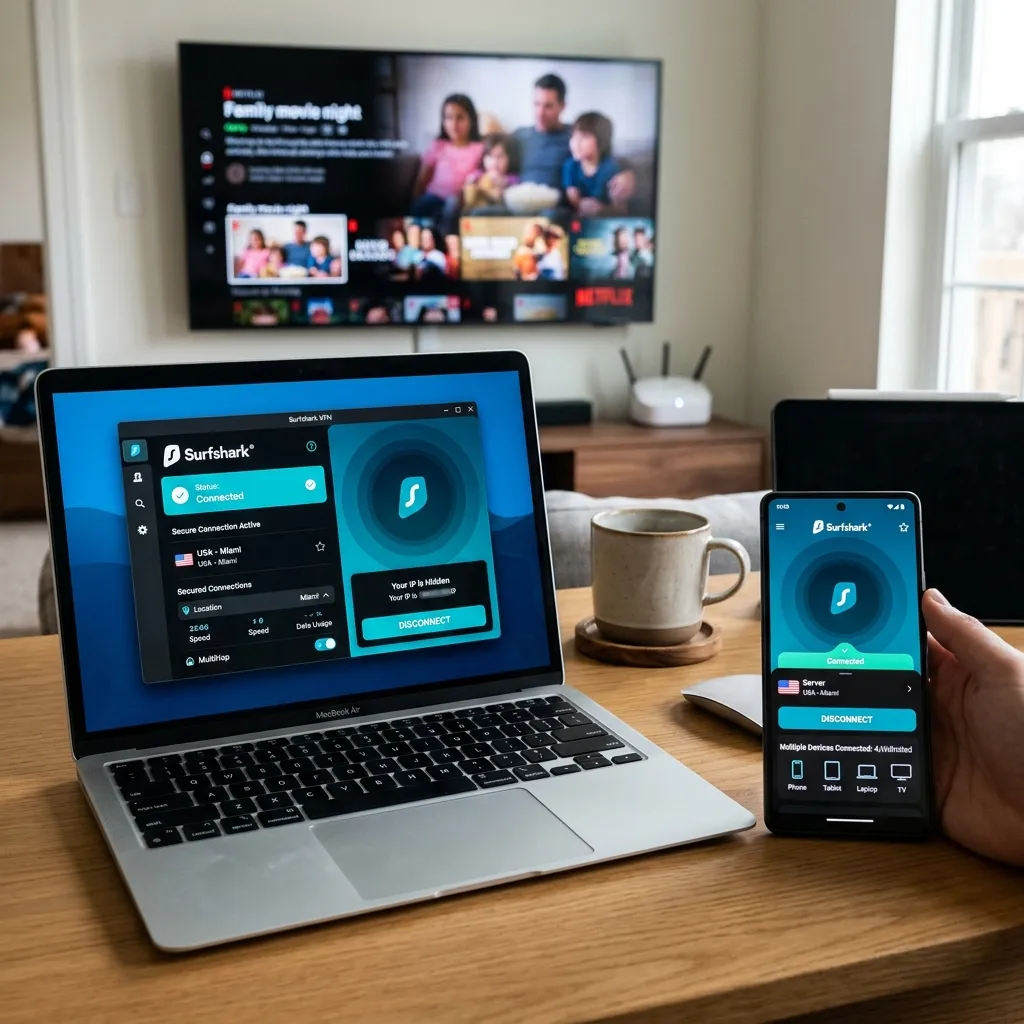
Surfshark Review (2026): Features, Pricing, Pros and Cons
Read our in-depth Surfshark review for 2026. Explore features, pricing, security, streaming performance, privacy policies, and whether Surfshark is worth it.
Best VPN Services (2026): Top VPNs Compared for Privacy, Streaming and Security
Compare the best VPN services in 2026. Explore features, privacy policies, streaming performance, pricing, and security to choose the right VPN for your needs.