What Is Cloud Computing? A Beginner's Guide to How the Cloud Works (2026)

Sunil Kumar
Founder & Editor, Locitra
Learn what cloud computing is, how it works, its benefits, types, and real-world examples. A complete beginner-friendly guide for 2026.
Introduction
If you've ever used Google Drive, Dropbox, Netflix, or Gmail, you've already used cloud computing.
Cloud computing powers much of the internet today. Businesses, students, creators, and developers rely on cloud services to store data, run applications, and collaborate online.
In this guide, you'll learn what cloud computing is, how it works, its benefits, different types, and why it's becoming the foundation of modern technology.
What Is Cloud Computing?
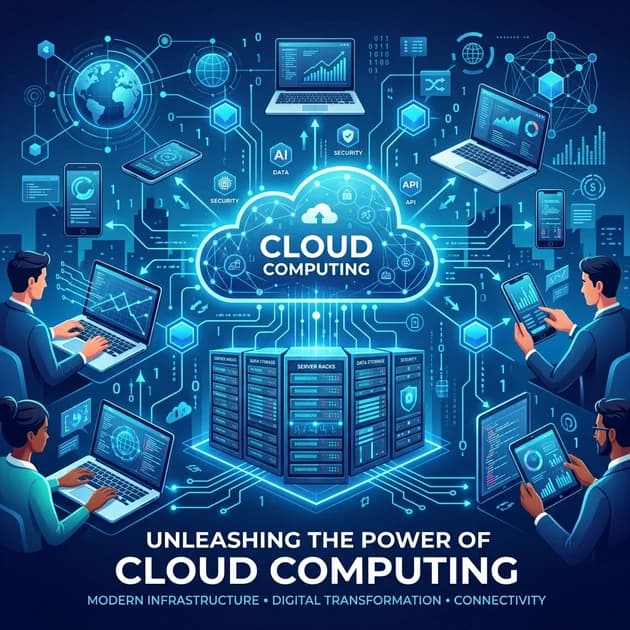
Cloud computing is the delivery of computing services over the internet.
Instead of storing files or running software on your own computer, you access these resources through remote servers managed by cloud providers.
These services can include:
- Data storage
- Databases
- Software applications
- Networking
- Analytics
- Artificial intelligence
- Computing power
Simply put, cloud computing allows you to use technology resources whenever you need them without owning expensive hardware.
How Does Cloud Computing Work?
Cloud providers operate massive data centers filled with servers.
When you upload a file to Google Drive or stream a movie on Netflix:
- Your request travels through the internet.
- Cloud servers process the request.
- Data is delivered back to your device.
This process happens in seconds and can support millions of users simultaneously.
Types of Cloud Computing
Public Cloud
Services are provided over the internet and shared among multiple customers.
Examples:
- Amazon Web Services (AWS)
- Microsoft Azure
- Google Cloud
Private Cloud
Infrastructure is dedicated to a single organization.
Benefits include:
- Greater control
- Higher security
- Customization options
Hybrid Cloud
A combination of public and private cloud solutions.
Businesses often use hybrid cloud strategies to balance flexibility and security.
Benefits of Cloud Computing
Cost Savings
No need to purchase expensive servers or infrastructure. Cloud adoption is one of the key strategies for small businesses wanting to save money while scaling.
Scalability
Resources can be increased or decreased based on demand.
Accessibility
Users can access data from anywhere with an internet connection.
Security
Leading cloud providers invest heavily in cybersecurity technologies.
Automatic Updates
Software updates are managed automatically by service providers.
Real-World Examples
Google Drive
Cloud-based storage and collaboration.
Netflix
Streams content through cloud infrastructure.
Spotify
Delivers music from cloud servers globally.
Dropbox
Provides cloud file storage and sharing.
Cloud Computing and Artificial Intelligence
Many AI tools rely on cloud computing to process large amounts of data, acting as the foundation for the future of artificial intelligence.
Cloud platforms provide:
- Machine learning services
- AI models
- Data analytics
- Conversational AI tools
Without cloud computing, many modern AI applications would be impossible to scale. In fact, many of the Best AI Tools for Productivity are hosted entirely on cloud infrastructure.
Challenges of Cloud Computing
While cloud technology offers many benefits, there are some challenges:
- Internet dependency
- Data privacy concerns
- Vendor lock-in
- Service outages
Organizations should evaluate providers carefully before adoption.
Future of Cloud Computing
Cloud computing continues to evolve through:
- Edge computing
- Serverless computing
- AI-powered infrastructure
- Quantum computing integration
Experts expect cloud adoption to keep growing across every industry.
Frequently Asked Questions
What is the simplest definition of cloud computing?
Cloud computing means storing and accessing data and programs over the internet instead of your computer's hard drive.
Is cloud computing safe?
Yes, generally speaking, data stored in the cloud is encrypted and protected by robust cybersecurity measures implemented by major providers like Google, Amazon, and Microsoft.
Why is cloud computing important for AI?
AI requires massive computing power to process huge datasets. Cloud computing provides the scalable infrastructure needed to train and run these complex AI models efficiently.
Final Thoughts
Cloud computing has transformed how individuals and businesses use technology. By providing flexible, scalable, and cost-effective resources over the internet, the cloud has become a critical part of modern digital life.
Whether you're storing files, streaming videos, or using AI tools, cloud computing is working behind the scenes to make it possible.
Related Articles
Weekly Intelligence
Stay Ahead of the Curve
AI tools, technology trends, digital income strategies and creator success stories — curated every week, always free.
No spam. Unsubscribe anytime.
Keep Reading
Related Articles

Edge Computing Explained: What It Is and Why It Matters in 2026
Learn what edge computing is, how it works, its benefits, real-world applications, and why it is becoming essential for IoT, AI, and 5G technologies.

How 5G Technology Works and Why It Matters in 2026
Learn how 5G technology works, its benefits, real-world applications, and how it is transforming industries through faster connectivity, IoT, AI, and edge computing.

What Is the Internet of Things (IoT)? A Beginner's Guide (2026)
Learn what the Internet of Things (IoT) is, how it works, real-world examples, benefits, challenges, and why IoT is transforming modern life.