What Is the Internet of Things (IoT)? A Beginner's Guide (2026)

Sunil Kumar
Founder & Editor, Locitra
Learn what the Internet of Things (IoT) is, how it works, real-world examples, benefits, challenges, and why IoT is transforming modern life.
Introduction
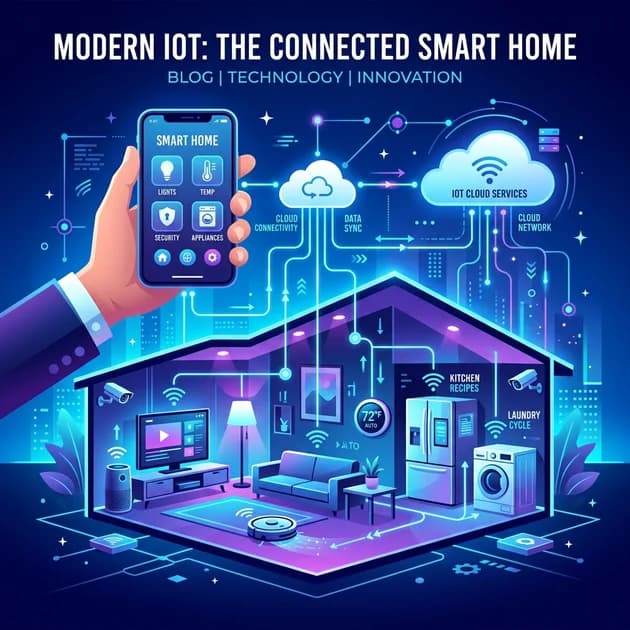
Imagine waking up in the morning. Before you even open your eyes, your bedroom blinds slowly open to let in the natural light, your thermostat adjusts the temperature to your preferred setting, and your coffee maker begins brewing your morning cup. As you step out the door, your house automatically locks itself, and your car has already warmed up the engine and planned the fastest route to work based on real-time traffic data.
This isn't science fiction—it is the reality of the Internet of Things (IoT). Over the past decade, our devices have evolved from isolated machines into intelligent, connected ecosystems. But what exactly makes these devices "smart"? How do they communicate with each other, and what does this mean for our privacy, security, and daily lives?
In this beginner-friendly guide, we will explore what IoT is, how it functions behind the scenes, and why it is consistently ranked among the Top Technology Trends shaping our modern world. Whether you are setting up a smart home or simply want to understand the technology powering your fitness tracker, this guide will provide a comprehensive, easy-to-understand overview.
What Is the Internet of Things (IoT)?
To put it simply, the Internet of Things (IoT) refers to the vast network of physical objects—or "things"—that are embedded with sensors, software, and other technologies for the purpose of connecting and exchanging data with other devices and systems over the internet.
Historically, the internet was a network made up almost entirely of computers, servers, and eventually smartphones. These devices required human interaction to generate data (like typing an email or uploading a photo). However, the concept of IoT changes this dynamic entirely. In an IoT ecosystem, the "things" are capable of gathering data and communicating it to the internet without any human intervention.
These "things" can be almost anything. They range from ordinary household objects like lightbulbs, refrigerators, and thermostats, to sophisticated industrial tools, medical devices, and even entire smart city infrastructures. If a device can connect to the internet and share data, it is a part of the Internet of Things.
How IoT Works
Understanding IoT for beginners involves breaking down the complex ecosystem into four distinct, logical steps. While the specific technologies can vary wildly from a smart toaster to a commercial jet engine, the underlying process remains remarkably similar.
Here is a breakdown of how IoT works:
Sensors
The first step in any IoT system involves data collection. Devices are equipped with sensors or devices that gather minute-by-minute data from their environments. A sensor could be a thermometer in a smart thermostat, a motion detector in a home security camera, a heart rate monitor on a smartwatch, or even a GPS tracker on a shipping container. Often, a single device will have multiple sensors (like your smartphone, which contains a camera, GPS, accelerometer, and microphone).
Connectivity
Once the data is collected by the sensors, it needs a way to be transmitted for processing. This is where connectivity comes in. IoT devices can connect to the internet (or to a local network) through a variety of methods. These include cellular networks (like 4G or 5G), Wi-Fi, Bluetooth, satellite connections, or low-power wide-area networks (LPWAN) designed specifically for IoT. The choice of connectivity depends on the specific use case: a smartwatch uses Bluetooth to connect to a phone, while an agricultural drone might rely on cellular or satellite data.
Data Processing
After the data makes its way to the cloud or a central server, software processes it. This processing can be incredibly simple, such as checking if the temperature reading from a smart thermometer is within an acceptable range. Alternatively, it can be highly complex, such as using computer vision to identify intruders on a security camera feed or predicting when a factory machine might break down.
User Interface
The final step is making the processed data useful to a human. This is usually achieved through a user interface, such as a mobile app, a web dashboard, or an alert sent via text message or email. For example, if your home security system detects unusual motion, the data processing step determines it is a potential threat, and the user interface step is the notification that pops up on your phone. In many advanced IoT systems, the user interface also allows the user to perform an action—like remotely unlocking a door or adjusting the thermostat.
Real-World Examples of IoT
To truly grasp IoT technology, it is helpful to look at how it is applied in the real world. IoT applications span almost every industry and aspect of daily life.
Smart Homes
The smart home is the most familiar IoT application for most consumers. Smart thermostats like Nest learn your temperature preferences and adjust automatically to save energy. Smart lighting systems like Philips Hue can be controlled via voice commands or scheduled to turn on when you arrive home. Smart refrigerators can track expiration dates and automatically order groceries. These connected devices communicate with each other to create a seamless, automated living environment.
Smart Watches
Wearable technology, particularly smartwatches and fitness trackers, is a booming sector of IoT. Devices like the Apple Watch or Fitbit constantly monitor your heart rate, step count, sleep patterns, and even blood oxygen levels. This data is synced to your smartphone and the cloud, providing detailed insights into your health and helping healthcare providers monitor chronic conditions remotely.
Connected Vehicles
Modern cars are effectively rolling computers. Connected vehicles use IoT technology to monitor engine performance, track location, provide real-time traffic updates, and even detect collisions to automatically call emergency services. In the commercial sector, trucking companies use IoT fleets to track vehicle locations, monitor driver behavior, and optimize delivery routes to save fuel.
Smart Cities
On a larger scale, municipalities are using IoT to improve urban living. Smart traffic lights adjust their timing based on real-time traffic flow to reduce congestion. Smart waste management systems use sensors in trash cans to alert collection trucks only when they are full. Environmental sensors monitor air and water quality across the city, providing data to help reduce pollution.
Industrial IoT
Often referred to as IIoT (Industrial Internet of Things), this involves using connected sensors in manufacturing, logistics, and agriculture. In a factory, sensors on machinery can detect unusual vibrations or heat, predicting a breakdown before it happens (predictive maintenance) and saving millions in downtime. In agriculture, soil sensors can measure moisture levels and trigger irrigation systems only when necessary, conserving water and improving crop yields.
Benefits of IoT
The widespread adoption of the Internet of Things is driven by a multitude of benefits that impact both individuals and large organizations.
- Efficiency and Automation: By automating routine tasks, IoT saves massive amounts of time. Smart home routines happen without human input, and industrial automation significantly speeds up manufacturing processes.
- Cost Savings: Smart thermostats reduce energy bills by optimizing heating and cooling. Predictive maintenance in factories prevents expensive equipment failures.
- Improved Decision Making: IoT provides real-time, actionable data. Whether it's a farmer deciding when to water crops or a business owner analyzing customer foot traffic, data-driven decisions are more accurate and profitable.
- Enhanced Quality of Life: From wearable health monitors that detect irregular heartbeats to smart home devices that offer convenience and security, IoT directly improves our daily comfort and safety.
Challenges and Risks of IoT
Despite its incredible potential, the Internet of Things is not without significant challenges. As we connect more aspects of our lives to the internet, we inadvertently expose ourselves to new risks.
Privacy Concerns
With billions of devices constantly gathering data, privacy is a major issue. Your smartwatch knows your health data, your smart speaker listens to your voice, and your connected car knows exactly where you travel. The aggregation of this highly personal data raises critical questions about who owns this information, who has access to it, and how it is being used for marketing or surveillance.
Security Risks
Security is perhaps the most pressing challenge facing IoT. Unlike computers and smartphones, which receive regular security updates, many smart devices (like cheap smart lightbulbs or generic webcams) are manufactured with little to no security in mind. This makes them easy targets for hackers. A compromised IoT device can be used to spy on a household or can be hijacked and added to a "botnet" to launch massive cyber attacks against other networks. Understanding What Is Cybersecurity is essential before filling your home or business with connected devices.
Data Management Challenges
The sheer volume of data generated by billions of IoT devices is staggering. Storing, processing, and analyzing this "Big Data" requires massive computational power and sophisticated infrastructure. If organizations cannot effectively manage and interpret this data, the entire value of the IoT system is lost.
IoT and Cloud Computing
It is nearly impossible to discuss IoT without also discussing cloud computing. They are two halves of the same coin.
IoT devices generate the data, but they typically do not have the processing power or storage capacity to analyze it themselves. This is where the cloud comes in. The data is transmitted to massive, remote servers—the cloud—where it can be securely stored and analyzed by powerful algorithms.
If you want to understand the infrastructure that makes IoT possible, you must first understand What Is Cloud Computing. The cloud acts as the central brain, while IoT devices act as the sensory organs spread out across the world.
IoT and Artificial Intelligence
If the cloud is the brain's storage, Artificial Intelligence (AI) is its reasoning capability. AI and IoT are increasingly being combined in a concept known as AIoT (Artificial Intelligence of Things).
While IoT systems collect massive datasets, humans simply cannot analyze it all manually. AI algorithms—similar to the underlying technology powering tools like those discussed in our ChatGPT vs Gemini comparison—are used to find patterns, make predictions, and trigger automated responses. For example, AI analyzes the data from autonomous vehicle sensors in real-time to decide when to brake or steer. Without AI, the data generated by IoT would be overwhelming and largely useless.
Future of IoT
The future of the Internet of Things is boundless. Experts predict that the number of connected devices will continue to explode, eventually reaching tens of billions worldwide.
Several key trends will shape the future of IoT:
- 5G Networks: The widespread rollout of 5G will provide faster speeds and lower latency, allowing IoT devices to communicate almost instantly. This is crucial for applications like autonomous driving and remote surgery.
- Edge Computing: Instead of sending all data to the cloud, edge computing processes data closer to where it is generated (at the "edge" of the network). This reduces latency and saves bandwidth, which is essential for real-time applications.
- Enhanced Security Legislation: As the risks become more apparent, governments will likely introduce stricter security regulations and standards that IoT manufacturers must follow.
Frequently Asked Questions
What is a simple definition of the Internet of Things?
The Internet of Things (IoT) is a network of physical objects—like appliances, vehicles, and wearable tech—that connect to the internet to collect and share data without human intervention.
What is an example of an IoT device?
Common examples include smart thermostats (like Google Nest), smart speakers (like Amazon Echo), fitness trackers (like Fitbit), and smart security cameras (like Ring).
Is my smartphone an IoT device?
While your smartphone is packed with sensors and connects to the internet, it is generally considered a hub or a controller for IoT rather than an IoT device itself, primarily because it requires heavy human interaction to generate its most valuable data.
Why is IoT security important?
Because IoT devices collect highly sensitive personal data and control physical environments (like door locks or medical equipment), a security breach could lead to severe privacy violations, financial loss, or physical harm.
Final Thoughts
The Internet of Things has fundamentally altered how we interact with our environment. By bridging the gap between the physical and digital worlds, IoT technology offers unprecedented convenience, efficiency, and insight into our daily routines and business operations.
However, as we embrace the benefits of smart homes, connected cars, and automated cities, we must also remain vigilant about the associated privacy and security risks. By understanding how IoT works and taking proactive steps to secure our devices, we can safely enjoy the incredible advantages of a fully connected world.
Related Articles
Weekly Intelligence
Stay Ahead of the Curve
AI tools, technology trends, digital income strategies and creator success stories — curated every week, always free.
No spam. Unsubscribe anytime.
Keep Reading
Related Articles
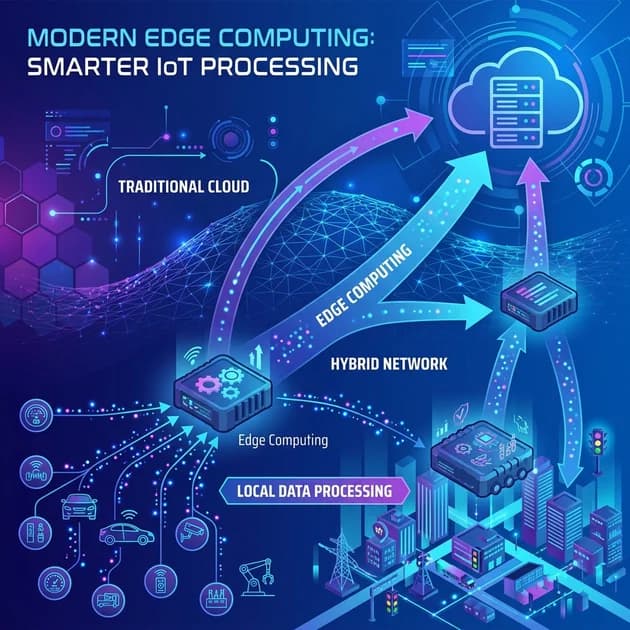
Edge Computing Explained: What It Is and Why It Matters in 2026
Learn what edge computing is, how it works, its benefits, real-world applications, and why it is becoming essential for IoT, AI, and 5G technologies.
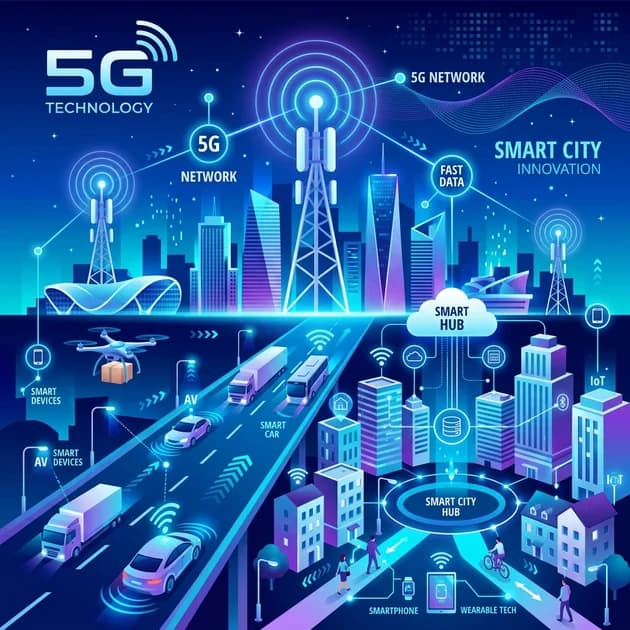
How 5G Technology Works and Why It Matters in 2026
Learn how 5G technology works, its benefits, real-world applications, and how it is transforming industries through faster connectivity, IoT, AI, and edge computing.
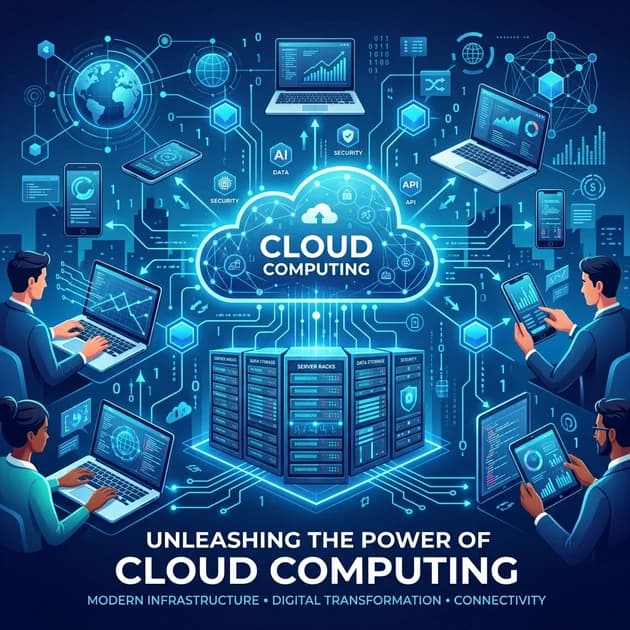
What Is Cloud Computing? A Beginner's Guide to How the Cloud Works (2026)
Learn what cloud computing is, how it works, its benefits, types, and real-world examples. A complete beginner-friendly guide for 2026.