What Is the Internet of Things (IoT)? A Beginner's Guide (2026)

Sunil Kumar Uikey
Founder & Editor-in-Chief
Learn what the Internet of Things (IoT) is, how it works, real-world examples, benefits, challenges, and why IoT is transforming modern life.
Introduction
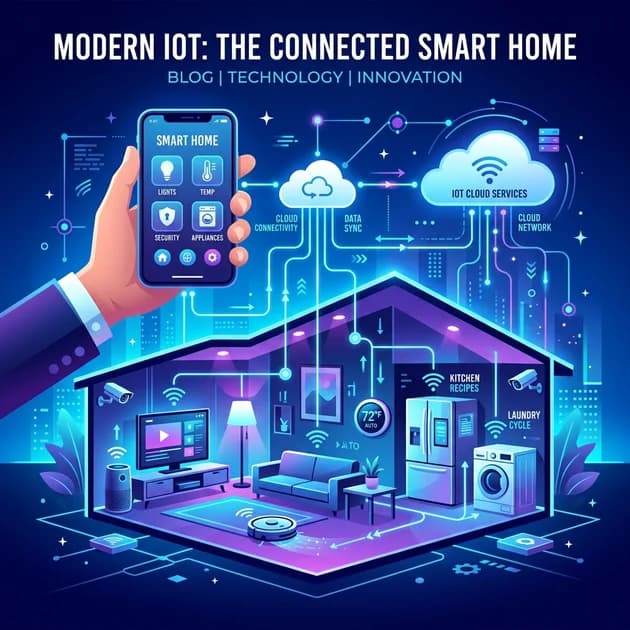
Imagine waking up in the morning. Before you even open your eyes, your bedroom blinds slowly open to let in the natural light, your thermostat adjusts the temperature to your preferred setting, and your coffee maker begins brewing your morning cup. As you step out the door, your house automatically locks itself, and your car has already warmed up and mapped the fastest route to work based on real-time traffic data.
This is not science fiction. It is the reality that the Internet of Things (IoT) is quietly building around us, one connected device at a time.
Over the past decade, our devices have evolved from isolated machines into intelligent, interconnected ecosystems that sense, communicate, and act autonomously. Your fitness tracker monitors your heart rate while you sleep. The sensor on your office building's HVAC system predicts a failure before disruption occurs. A soil moisture sensor on a farm triggers an irrigation pump without human involvement.
In this beginner-friendly guide, we explore what IoT is, how it works, where it is transforming industries, and what it means for privacy, security, and the future of connected life.
Quick Answer
What is the Internet of Things (IoT)? The Internet of Things is the massive global network of connected devices embedded with sensors, software, and connectivity that collect and exchange real-time data over the internet. These smart systems bridge the physical and digital worlds, enabling unprecedented automation without human intervention. From smart home thermostats to complex industrial digital infrastructure, IoT powers the data collection required to run the modern digital economy.
How IoT Works
IoT fundamentally changes how we interact with the physical world. Rather than humans manually inputting data into a computer, IoT devices sense their environments autonomously and transmit that data continuously.
IoT Architecture Diagram
The journey of data from a physical object to a useful action follows a specific architectural path:
       [Physical World]
              │
              ▼
      [Sensors & Devices]
              │
              ▼
         [Connectivity]
(Wi-Fi • 5G • LPWAN • Bluetooth)
              │
              ▼
         [Edge Gateway]
              │
              ▼
        [Cloud Platform]
              │
              ▼
         [AI Analytics]
              │
              ▼
[Automation & User Applications]
The IoT Technology Ecosystem
IoT does not exist in isolation. It acts as the sensory nervous system for a much broader technology stack:
         [IoT Devices]
              │
              ▼
       [Cloud Computing]
              │
              ▼
    [Artificial Intelligence]
              │
              ▼
        [Edge Computing]
              │
              ▼
         [Digital Twins]
              │
              ▼
         [Smart Cities]
These technologies reinforce one another. Cloud Computing provides the vast storage required for IoT data. Artificial Intelligence analyzes that data to make autonomous decisions. Edge Computing allows time-critical decisions to happen locally without waiting for the cloud. The combined data creates Digital Twins, which are used to manage entirely Smart Cities.
The Five Core Components of IoT
- Sensors: The physical hardware that detects environmental changes (temperature, motion, light, pressure). Example: A gyroscope in a smartphone.
- Connectivity: The networking technology that transmits the sensor data. Example: 5G Networks or Wi-Fi.
- Edge Computing: Local processing hubs that filter out useless data before sending it to the cloud. Example: A smart factory gateway.
- Cloud Platforms: The massive remote data centers provided by AWS, Microsoft Azure, or Google Cloud that store and process billions of data points.
- Applications & Analytics: The software interface where humans or AI make decisions based on the data. Example: A mobile app showing your heart rate.
Standards and Protocols Behind IoT
To allow billions of disparate devices to communicate, the IoT industry relies on strict protocols maintained by organizations like the IEEE, ITU, and the Connectivity Standards Alliance (CSA).
- MQTT: A lightweight messaging protocol perfect for devices with limited battery life.
- CoAP: Designed specifically for constrained devices in machine-to-machine (M2M) applications.
- HTTP/HTTPS: The standard web protocol, used when devices communicate directly with web servers.
- Zigbee & Z-Wave: Low-power mesh networking protocols heavily used in smart home ecosystems.
- Matter: The new, unifying smart home standard designed by Apple, Google, and Amazon to ensure all devices talk to each other.
- LoRaWAN: Low Power Wide Area Network, used for sending small amounts of data over long distances (e.g., agricultural sensors).
- NB-IoT: Narrowband IoT, a cellular standard designed for massive deployments of simple devices (e.g., smart utility meters).
Choosing the Right IoT Connectivity (Comparison Matrix)
No single connectivity standard works for every situation.
| Technology | Best For | Strength |
|---|---|---|
| Wi-Fi | Smart Homes | High bandwidth |
| Bluetooth LE | Wearables | Low power |
| Zigbee | Home Automation | Mesh networking |
| LoRaWAN | Agriculture | Long range, Low power |
| NB-IoT | Smart Utilities | Massive deployments |
| 5G | Autonomous Vehicles | Ultra-low latency |
How Industries Use IoT (Industry Adoption Matrix)
The most lucrative application of IoT is in enterprise environments.
| Industry | Primary Applications |
|---|---|
| Manufacturing | Predictive Maintenance, Industrial Automation |
| Healthcare | Remote Patient Monitoring, Asset Tracking |
| Agriculture | Precision Farming, Soil Monitoring |
| Retail | Smart Inventory, Automated Checkout |
| Transportation | Fleet Management, Telematics |
| Energy | Smart Grid, Load Balancing |
| Government | Smart Cities, Traffic Optimization |
Best Practices for Successful IoT Deployment
Deploying IoT at scale introduces significant risk. The NIST provides rigorous guidelines for safe deployment:
- Security by Design: Never deploy IoT devices with default passwords. Implement strict Cybersecurity protocols from day one.
- Device Lifecycle Management: Have a plan for how devices will be updated and eventually decommissioned securely.
- Strong Authentication: Ensure every device has a unique identity and cryptographic certificate.
- Network Segmentation: Keep IoT devices on a separate network from core business servers.
- Firmware Updates: Only deploy devices that support secure, over-the-air (OTA) updates.
- Privacy Protection: Collect only the absolute minimum data required for the device to function.
- Open Standards: Avoid vendor lock-in by using open-source standards maintained by the Eclipse Foundation or Linux Foundation.
- Data Governance: Know exactly where your data is stored and who has access to it.
- Scalability Planning: Build cloud architecture that can handle millions of data points simultaneously.
- Continuous Monitoring: Use AI to monitor device health and detect anomalies indicating a cyber attack.
Expand Enterprise Perspective
For enterprise leaders, IoT is synonymous with Industry 4.0.
Companies like Siemens, Cisco, and Bosch are leading the charge in converting analog factories into fully digitized Smart Factories. By connecting Operational Technology (OT) to IT networks, manufacturers achieve complete visibility over digital supply chains. Instead of replacing a machine part on a fixed schedule, sensors monitor vibration and temperature to execute predictive maintenance precisely before the part breaks. This level of connected operations prevents millions of dollars in unplanned downtime and drastically improves overall equipment effectiveness (OEE).
Future Outlook
Current IoT Landscape
We exist in a highly fragmented market where consumer IoT (Smart Homes) is finally unifying under the Matter standard, while Industrial IoT (IIoT) is scaling rapidly to optimize global supply chains.
Near Future (3–5 Years)
The dominant trend will be AIoT (Artificial Intelligence of Things), where AI algorithms are embedded directly into edge devices. This Edge AI will allow smart cameras using Machine Vision to make autonomous decisions instantly without cloud connectivity.
Long-Term Outlook
Looking a decade out, the integration of IoT with 6G networks and advanced Robotics will enable truly autonomous infrastructure. Smart cities at scale will rely on massive, planet-wide sensor networks to optimize everything from autonomous traffic routing to sustainable, zero-waste energy grids.
FAQ Section
What is AIoT?
AIoT (Artificial Intelligence of Things) is the combination of AI technologies with IoT infrastructure. While IoT collects data, AI analyzes it, allowing devices to make autonomous decisions without human intervention.
What is an IoT gateway?
An IoT gateway is a physical device or software program that serves as the connection point between cloud platforms and IoT devices. It filters data, translates protocols, and provides critical edge computing capabilities.
What is the difference between IoT and IIoT?
IoT generally refers to consumer devices (smartwatches, smart thermostats), while IIoT (Industrial IoT) refers to ruggedized sensors used in manufacturing, energy, and logistics, where failure could result in massive financial loss or physical danger.
Which connectivity technology is best?
There is no single "best" technology. Wi-Fi is great for high bandwidth at home, 5G is essential for low-latency autonomous vehicles, and LoRaWAN is best for agricultural sensors that need a battery to last for years in a field.
Is IoT secure?
Historically, IoT has been notoriously insecure due to manufacturers shipping devices with hardcoded default passwords. However, deploying IoT securely is possible by adhering to strict Zero Trust network segmentation and continuous monitoring.
How does edge computing improve IoT?
Edge computing processes data locally at the source (the edge of the network) rather than sending it all to a distant cloud server. This eliminates latency, reduces bandwidth costs, and ensures critical systems function even if the internet goes down.
What careers are available in IoT?
IoT is a massive growth sector. Careers range from Embedded Systems Engineers (hardware) to Cloud Architects (infrastructure), Data Scientists (analytics), and IoT Security Specialists (cyber defense).
Final Verdict
The Internet of Things is the digital bridge between the physical and virtual worlds, enabling connected devices to sense, communicate, analyze, and automate real-world processes at unprecedented scale.
By seamlessly combining sensors, diverse connectivity protocols, edge computing, massive cloud infrastructure, artificial intelligence, strict cybersecurity, digital twins, and 5G networks, IoT creates the intelligent systems required to run modern homes, global industries, healthcare, transportation, agriculture, and smart cities.
To truly understand how this intelligent infrastructure is shaping the modern world, we strongly encourage you to explore the related Locitra Technology pillar articles below.
Further Reading
To explore the exact standards, engineering frameworks, and enterprise protocols driving the Internet of Things, refer to the following authoritative resources:
- ITU IoT Resources: The UN agency guiding global telecom and IoT standards.
- IEEE IoT Initiative: The premier professional organization advancing IoT engineering.
- NIST IoT Program: The definitive US government authority on IoT cybersecurity.
- Eclipse IoT: Open-source frameworks for scalable IoT architectures.
- Connectivity Standards Alliance: The organization driving the universal Matter standard for smart homes.
- Linux Foundation Networking: Open-source infrastructure supporting massive IoT deployments.
Related Articles
- Top Technology Trends Shaping 2026
- What Is Cloud Computing?
- Edge Computing Explained: What It Is and Why It Matters
- What is Artificial Intelligence?
- Digital Twins Explained: What They Are and Why They Matter
- How 5G Technology Works and Its Impact
- Smart Cities Explained
- What Is Cybersecurity? A Complete Beginner's Overview
- Robotics and Automation Explained
- Industrial Automation Explained
- Machine Vision Explained
- Autonomous Vehicles Explained
- Future of Work Technology Trends 2026
Enjoyed this article?
Get practical AI tools, technology insights, software reviews, career growth advice, and online income strategies delivered to your inbox.
Keep Reading
Related Articles

Technology Trends in 2026: 10 Innovations Shaping the Future
Explore the definitive master guide to the top 10 technology trends shaping 2026. Discover how AI, edge computing, robotics, 5G, and sustainable innovation are converging to reshape the digital economy.
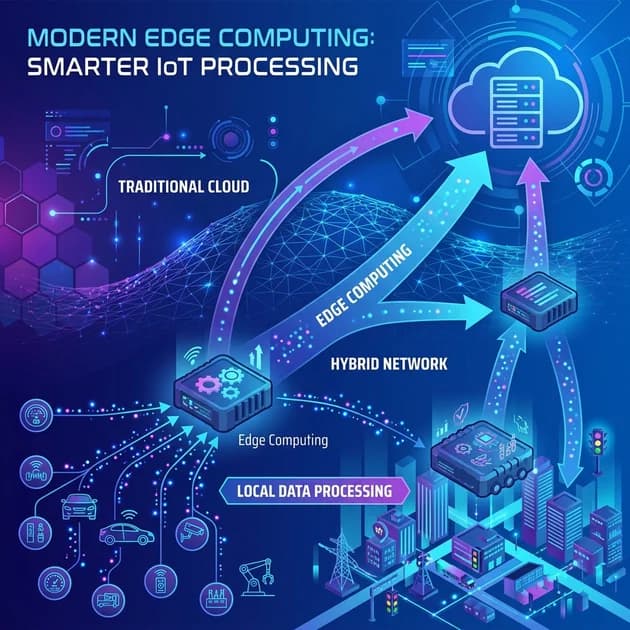
Edge Computing Explained: What It Is and Why It Matters in 2026
Learn what edge computing is, how it works, its benefits, real-world applications, and why it is becoming essential for IoT, AI, and 5G technologies.
ChatGPT vs Gemini in 2026: The Ultimate AI Showdown
An in-depth, technical comparison of ChatGPT vs Gemini in 2026. We break down their reasoning engines, ecosystem integrations, and which AI you should actually pay for.
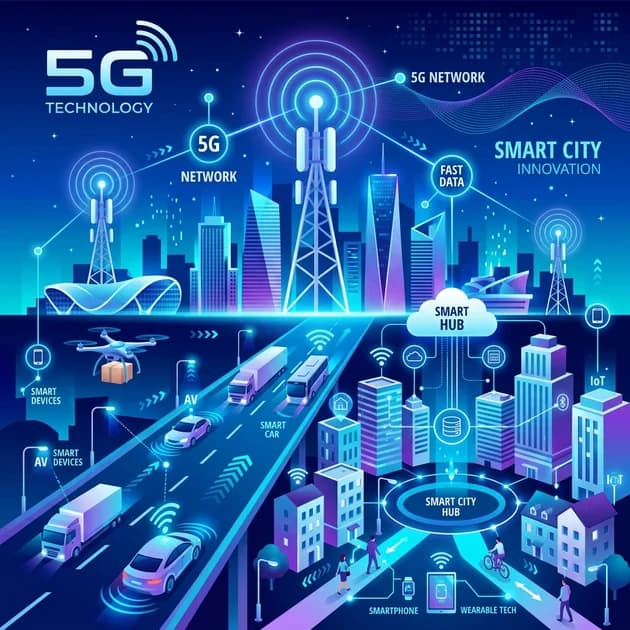
How 5G Technology Works and Why It Matters in 2026
Learn how 5G technology works, its benefits, real-world applications, and how it is transforming industries through faster connectivity, IoT, AI, and edge computing.
What Is Cloud Computing? A Beginner's Guide to How the Cloud Works (2026)
Learn what cloud computing is, how it works, its benefits, types, and real-world examples. A complete beginner-friendly guide for 2026.

Keeper Security Review (2026): The Enterprise-Grade Password Manager
Is Keeper the best password manager for zero-knowledge security in 2026? We review its features, pricing, and enterprise-grade encryption.